Scientists Unveil Giant Octopus Fossils Locked for 100 Million Years
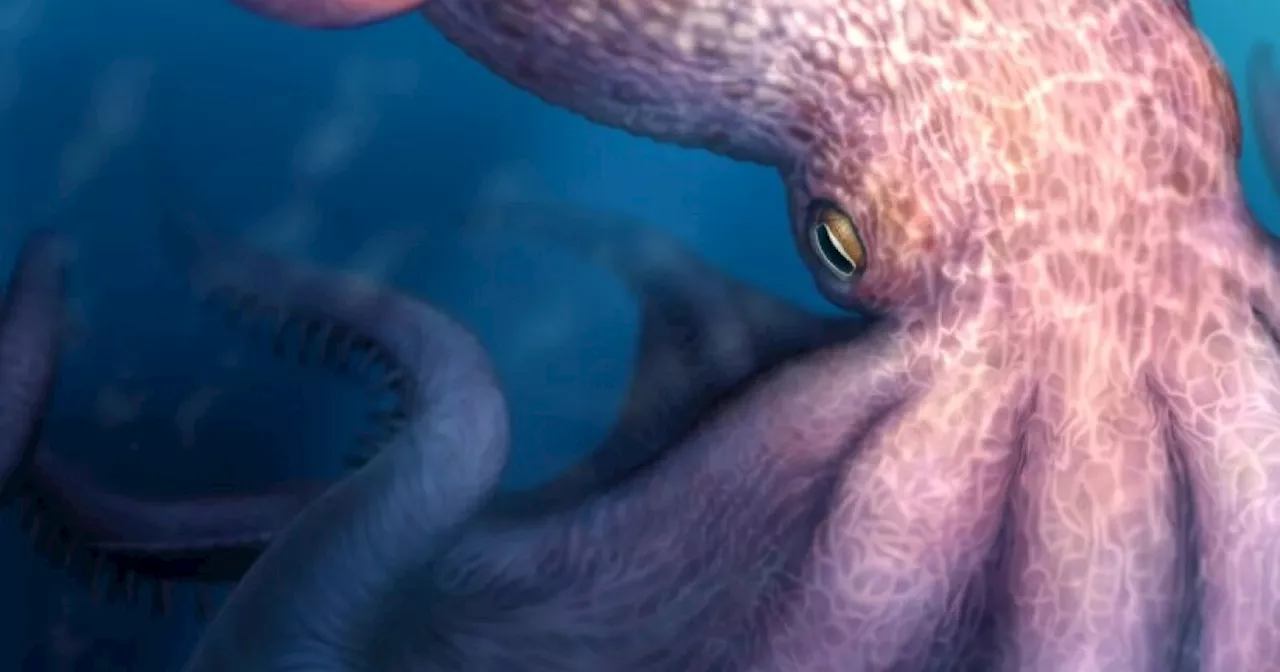
New fossil discoveries from northern Japan have revealed octopus jaws belonging to creatures estimated to have reached up to 60 feet long—far surpassing the size of today’s largest octopus species. These ancient giants patrolled the seas during the late Cretaceous period, roughly 100 million years ago, standing alongside other massive marine predators like mosasaurs.
The breakthrough came when paleontologists at Hokkaido University and Ruhr University Bochum used an innovative technique called digital fossil-mining to slice open concretions—dense rock formations preserved on the seafloor—and leverage AI-assisted 3D reconstruction to reveal the first well-preserved octopus jaws ever found. Unlike bones, the soft tissues of octopuses rarely fossilize, so this find is unprecedented.
Giant Octopus Jaws Unlock Secrets of Ancient Ocean Predators
The octopus jaws, composed of hardened beak-like material, measured significantly larger than any previously discovered fossilized cephalopod remains. These jaws enabled researchers to estimate the creatures’ full body size, revealing octopuses comparable in length to modern school buses. “The lower jaws were the biggest ever found,” said lead author Ren Hirayama, emphasizing the importance of jaw size in reconstructing evolutionary history.
Visible wear on the jaws, including distinct chips and scratches on the right side, indicate these ancient octopuses preyed on hard-shelled creatures like shrimp, lobsters, and bivalves. This damage pattern even suggested a strong-sided jaw preference—mirroring how humans favor one hand—pointing to advanced brain development and intelligence.
“Our findings suggest early octopuses already displayed the intelligence and hunting strategies associated with their modern descendants, making them active, apex carnivores,” explained paleontologist Hiroshi Iba from Hokkaido University. These creatures likely used their powerful arms to grasp and tear apart prey that was too large to swallow whole.
Revolutionizing Understanding of Cretaceous Marine Ecosystems
This discovery rewrites previous perceptions of Cretaceous ocean life, revealing a complex ecosystem with sophisticated predators, including these sizable octopuses that could rival mosasaurs in dominance. According to Jochen Mutterlose, a co-author from Ruhr University, the fossil evidence “sheds new light on the evolution of the biosphere at a time when giant predators ruled the seas.”
The technique used to uncover these fossils could open new frontiers in paleontology, allowing scientists to probe other concretions worldwide for hidden soft-bodied organisms previously obscured by the lack of preservation.
What’s Next?
Researchers plan to continue studying these fossils to better understand octopus evolution and the broader marine food chain dynamics of the Cretaceous period. This breakthrough also highlights the importance of advanced technologies like AI in deepening our knowledge of prehistoric life.
For readers across Delaware and the United States, this discovery underscores how cutting-edge research methods are uncovering secrets of Earth’s distant past that can inform our understanding of current marine biodiversity and evolution.