Scientists have just unveiled the largest-ever 3D map of the universe, charting an astonishing 47 million galaxies from our Milky Way to the distant era dubbed ‘cosmic noon,’ offering unprecedented insights into the universe’s structure and matter distribution.
At the same time, a major climate warning emerges as experts signal the Atlantic Meridional Overturning Circulation (AMOC) is inching dangerously close to a potential collapse. This ocean current system is vital for regulating global climate, and its failure could trigger extreme weather and disrupt economies worldwide, including in Delaware and across the US East Coast.
Universe Map Breaks Records Revealing Cosmic Web
The newly released 3D map catalogs a vast cosmic landscape, illuminating the large-scale structure of spacetime with unmatched depth and clarity. Scientists say this breakthrough enables better understanding of how galaxies formed and clustered during crucial phases of cosmic history, particularly around ‘cosmic noon,’ a peak era for star formation.
This mapping feat, fueled by advanced telescopes and AI, marks a pivotal moment for astrophysics, empowering researchers to probe dark matter distribution and the universe’s expansion with fresh precision.
Climate Alarm: AMOC on Brink of Collapse
Researchers confirm accelerating signs of instability in the AMOC. This giant ocean conveyor churns heat across the Atlantic, influencing weather patterns across North America and Europe. Scientists warn the AMOC’s weakening could result in harsher winters in Delaware, rising sea levels along the East Coast, and severe disruptions in agriculture and fisheries nationwide.
Climate experts emphasize immediate monitoring and mitigation efforts to address this mounting threat, calling for intensified global climate action to avert irreversible damage.
Groundbreaking Advances Beyond Astronomy and Climate
The frontiers of science expand with breakthroughs in technology and archaeology. A team of researchers has successfully engineered artificial neurons, a game-changing step toward bio-integrated devices and new paths to treat neurological disorders.
In a stunning archaeological discovery, scientists extracted a copy of the ‘Iliad’ hidden inside an Egyptian mummy, revealing rich cultural exchanges between ancient civilizations that deepen our understanding of early literature and history.
The ongoing hunt for treatments against deadly brain-eating amoebas remains critical as health officials highlight the rare but devastating nature of these infections.
Artemis II Mission Reveals Earth’s Fragility From Space
The crew aboard the Artemis II mission recently experienced a poignant moment when Earth vanished from sight during their journey, underscoring the planet’s fragile uniqueness. Shared publicly, their reflections inspire a renewed commitment to stewardship of our home world.
Additional stunning images from the moon’s far side have captured breathtaking ‘Earthsets’ and a total lunar eclipse viewed in orbit, providing Americans with new perspectives on space exploration.
Northern Lights Forecast Promises Spectacle Across US
A massive hole has opened in the sun’s atmosphere, sending streams of charged particles toward Earth and promising a rare, vivid display of the Northern Lights visible in multiple US states. This transient natural light show offers a thrilling event for sky watchers and travelers nationwide.
Hubble Delivers New Cosmic Portraits Decades Later
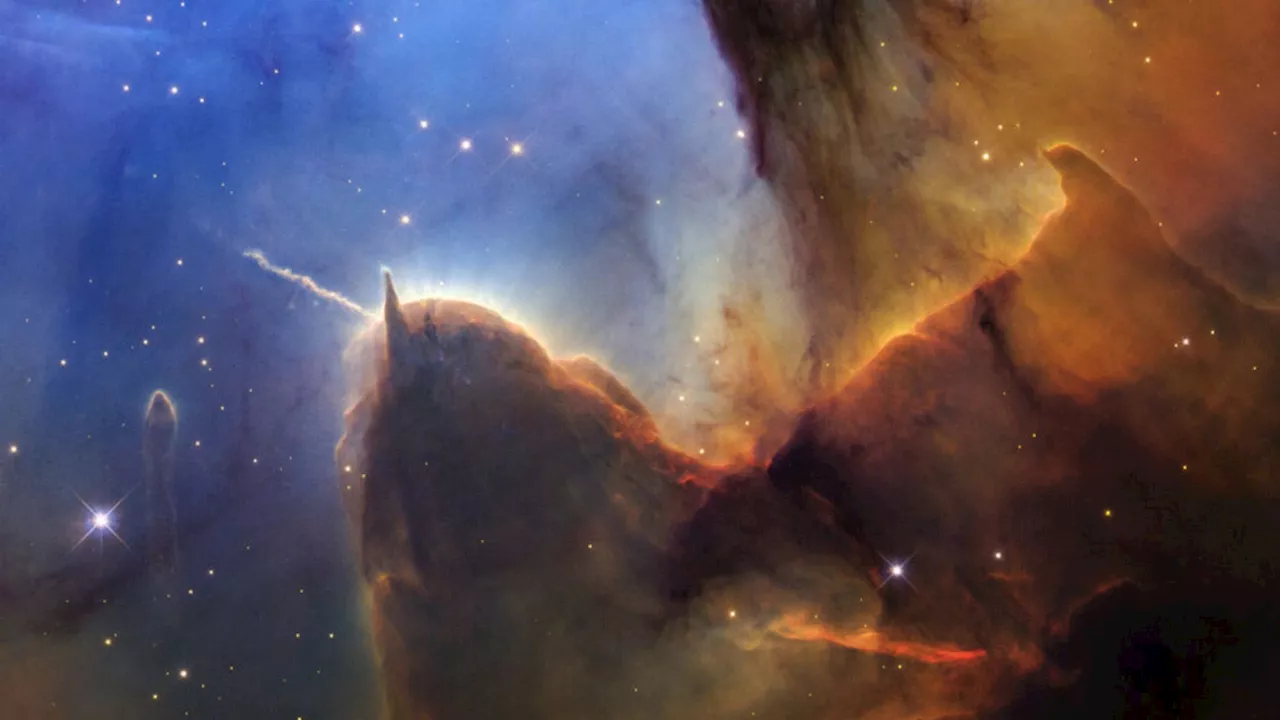
The Hubble Space Telescope released fresh images of the Trifid Nebula, aka the ‘Cosmic Sea Lemon,’ revealing intricate glowing ridges and jets shaped by young massive stars 5,000 light-years away. This latest portrait — captured 30 years after Hubble’s first observations — exposes the dynamic, evolving nature of star formation.
Complementing this are comparative images of the Crab Nebula taken 25 years apart, showcasing dramatic changes and allowing scientists to study supernova remnants’ expansion and energy output in real time.
Researchers have even tracked a fast-expanding jet from a baby star within the nebula, measuring its velocity and impact on surrounding gas and dust, adding to our understanding of how stars sculpt their birth clouds.
Why Delaware and the US Should Pay Attention Now
These discoveries shape our global and local future. The potential AMOC collapse threatens Delaware’s coastline and weather, underscoring the urgency of climate resilience planning. Simultaneously, astronomy breakthroughs enrich science education and inspire innovation, drawing the US deeper into space exploration ahead.
From space missions like Artemis II altering how we see Earth to biotechnological advances offering hope for neurological conditions, the pace of discovery commands immediate attention and action.
Stay tuned to The Delaware Herald for constant updates on these evolving stories, including science breakthroughs, climate alerts, and extraordinary celestial events visible across the US.