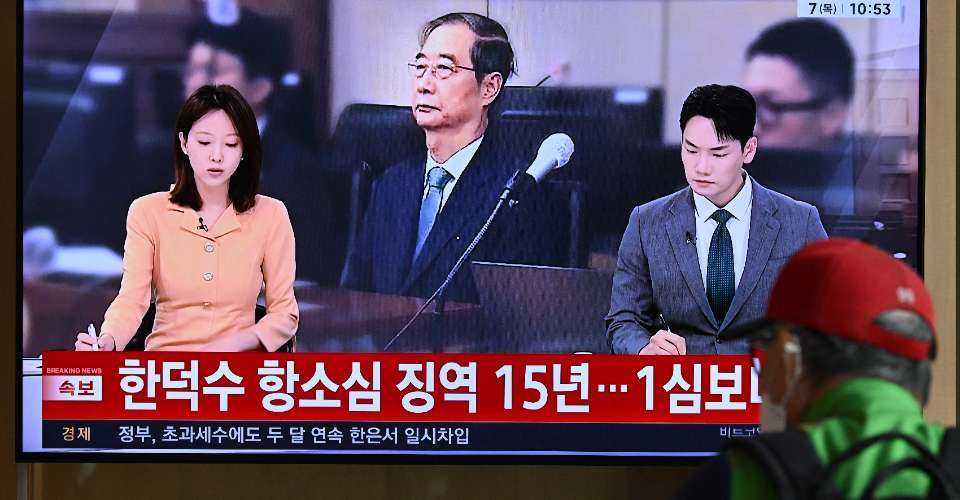
South Korean Appeals Court Cuts Former Prime Minister Han Duck-soo’s Prison Sentence
A South Korean court sharply reduced the jail term of former Prime Minister Han Duck-soo to 15 years for his role in the brief martial law declaration under ex-President Yoon Suk Yeol, a surprising move that is making headlines worldwide today.
Han was initially handed a 23-year prison sentence in January for supporting Yoon’s controversial martial law decree issued in December 2024. The decree suspended civilian rule for just six hours, triggering immediate chaos across South Korea before opposition lawmakers overturned it.
Judges Cut Sentence but Uphold Most Convictions
On May 7, the Seoul appeals court announced the sentence reduction by eight years. Presiding Judge noted that while Han’s convictions mostly remain, his punishments were lowered due to “more than 50 years as a public official” and limited evidence tying him to active conspiracy or leadership in the insurrection.
“The defendant abandoned the grave responsibilities arising from his authority and instead sided with those participating in the acts of insurrection,” the judge stated.
Han, 76, who served in various government capacities including as finance minister, has been imprisoned since January. During the hearing, he appeared solemn but showed little emotion.
Han’s Role During and After Martial Law
The court detailed Han’s actions after Parliament repealed martial law—he convened a cabinet meeting in Yoon’s stead to officially rescind the military rule, directly linking him to the decree’s implementation and reversal.
The sentencing judge sharply criticized Han for failing to oppose the martial law, especially given his firsthand experience with unconstitutional regimes during South Korea’s authoritarian era in the 1970s and 1980s. The judge emphasized his familiarity with the severe damage such measures cause.
Broader Crackdown on Yoon’s Inner Circle Continues
This case closes the latest round of appellate decisions targeting Yoon’s close allies. Just last week, Yoon himself had his sentence increased from five to seven years for obstructing justice. He remains jailed for life on separate charges of leading the insurrection.
Meanwhile, former first lady Kim Keon Hee, Yoon’s wife, saw her corruption sentence jump to four years following an appeals court ruling that overturned part of her prior acquittal related to bribery and stock manipulation.
Why This Matters Now
This dramatic sentence reduction comes amidst ongoing political turmoil in South Korea and highlights intense judicial scrutiny over the unprecedented martial law episode. For international audiences and those in Delaware, where democratic governance is a cherished principle, the case serves as a stark reminder of the dangers when democratic rules are bypassed—even briefly.
Authorities in Seoul are now concluding the last appellate reviews linked to this crisis, signaling a possible shift in how South Korea’s justice system balances harsh punishment with long public service records in politically charged cases.
Next Steps
Han’s defense team has yet to announce if they will seek further appeal or clemency. Meanwhile, Yoon’s lengthy incarceration continues to dominate headlines across Asia and the globe, with attention focused on the stability of South Korean governance and rule of law.
The Delaware Herald will provide ongoing coverage as this story develops, given its wide-reaching implications for democracy and political accountability worldwide.