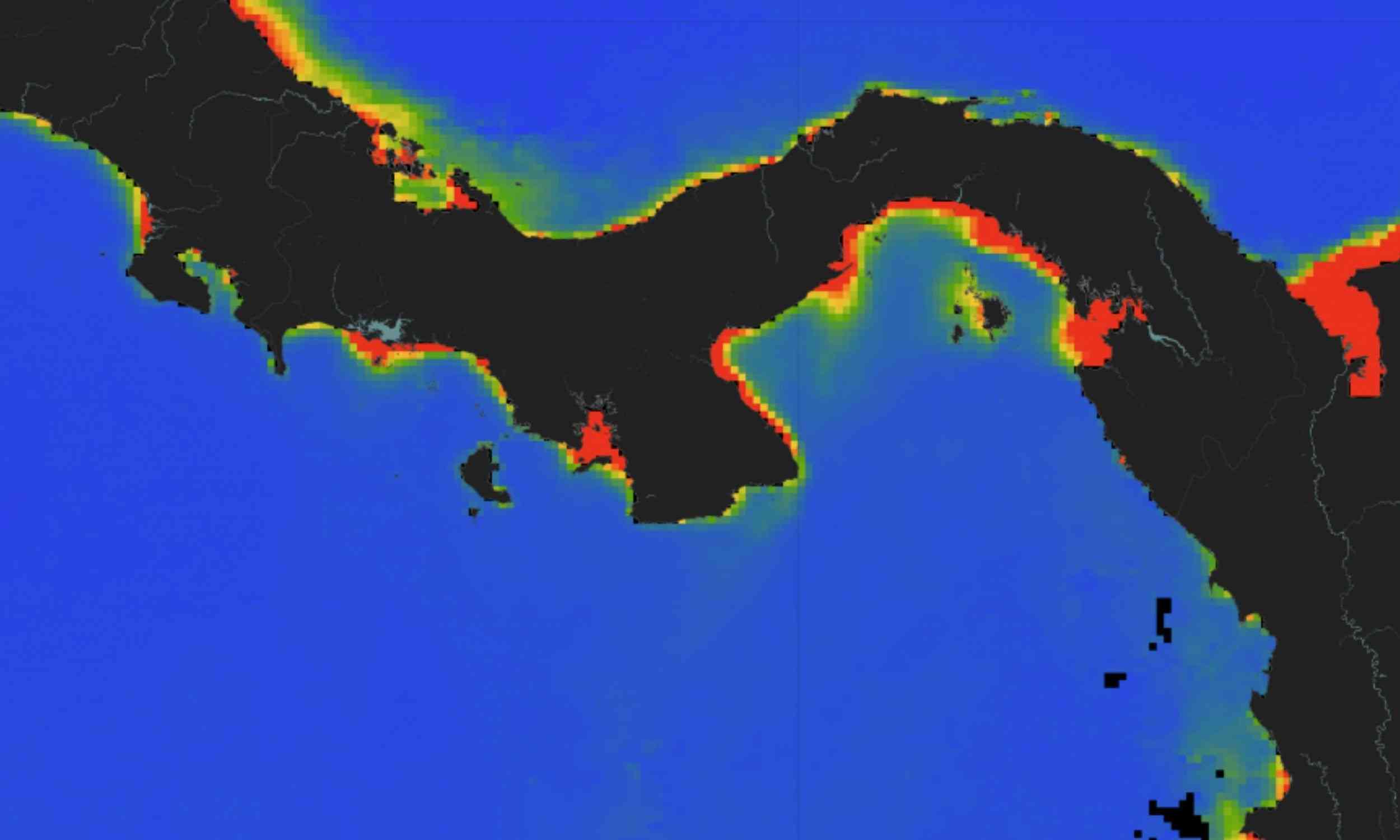
Scientists confirm a major ocean disruption: the Gulf of Panama’s seasonal upwelling failed in 2025 for the first time in at least 40 years, a critical event that threatens marine ecosystems and coastal communities.
Researchers led by Aaron O’Dea from the Smithsonian Tropical Research Institute (STRI) documented the unprecedented absence of the “ocean’s breath,” a cooling and nutrient-rich water surge that typically arrives each dry season along Panama’s Pacific coast. This natural ocean cycle supports coral reefs and coastal fisheries by bringing cold, nutrient-dense water to the surface, fueling productivity that sustains the entire marine food chain.
Critical Ocean Cooling Missing for Over Six Weeks
Historically, temperatures in the Gulf of Panama drop by January 20 every year as northerly winds drive surface waters offshore, allowing deep cold water to rise. In 2025, this cooling did not begin until March 4, delaying the seasonal upwelling by more than six weeks. What’s worse, the cold period lasted only 12 days instead of the usual two months, and ocean temperatures never reached the colder levels seen in past decades.
Surface water profiles recorded by the research vessel S/Y Eugen Seibold revealed warm layers stacked atop each other instead of the usual upwelling surge. Analysis showed the frequency of the critical north-blowing winds dropped 74 percent across the season, even though individual gusts remained strong. This breakdown in wind patterns halted the usual ocean process that cools coastal waters and feeds phytoplankton blooms.
Immediate Threat to Coral Reefs and Coastal Communities
The missing upwelling removed a vital natural buffer against heat stress for reefs. Previous studies have found this annual cooling helps corals survive extreme heat events, notably during El Niño cycles. Without this relief, reefs face increased thermal stress and higher risk of bleaching, which can devastate coral populations if repeated in future years.
Beyond ecosystems, coastal fishing families in Panama rely on the productivity spikes from upwelling that support small fish and, ultimately, local catches. The 2025 failure directly affected food availability and economic stability for communities tied to these marine resources – a reality that is difficult to measure quickly but will deepen over time if the cycle does not recover.
Unprecedented Event Challenges Climate Assumptions
The 2025 disruption occurred during a weak La Niña phase, a familiar Pacific climate pattern that has not previously caused upwelling failures there. This signals that regional ocean and atmospheric dynamics rather than broad global patterns are driving the change. Aaron O’Dea emphasized the urgency of local data in predicting how such vital ocean systems respond to climate variability:
“Panama’s 2025 upwelling failure underscores that regional-scale dynamics, rather than blanket global predictions, are essential for understanding these tropical upwelling systems.”
Because many tropical upwelling zones lack long-term monitoring data, similar failures could be happening elsewhere unnoticed. Panama’s uniquely robust records, including satellite data dating back to 1985 and direct temperature logs since 1995, allowed scientists to clearly identify this anomaly.
What’s Next: Close Monitoring and What to Watch For
The STRI team is now closely tracking conditions during the 2026 season with real-time public updates. Early reports show the upwelling’s return with strong cooling, suggesting the 2025 event might be a one-time shock rather than a permanent collapse.
Still, experts warn that ongoing monitoring and improved forecasts are critical for coastal communities to prepare for future variability. Seasonal upwelling powers marine life, protects coral reefs, and supports fisheries that are vital not just in Panama but across the world’s tropical coasts.
For readers in Delaware and the U.S., this underscores the importance of localized ocean monitoring amid global climate changes. As ocean-driven livelihoods face new threats, understanding and addressing sudden changes like Panama’s missing cooling season is urgent now.
The full scientific study appears in the Proceedings of the National Academy of Sciences, highlighting the need for global attention to localized ocean shifts that could ripple into broader environmental and economic impacts.