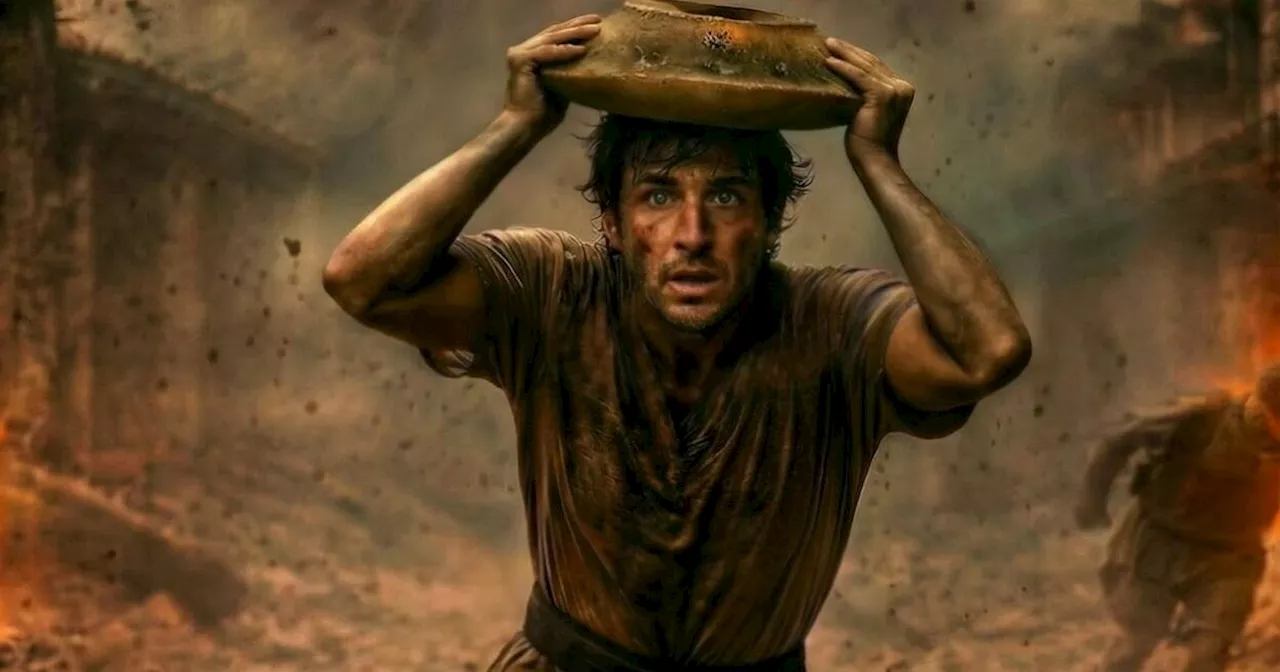
Archaeologists have achieved a breakthrough using artificial intelligence to digitally reconstruct the face of a Pompeii victim caught during the devastating eruption of Mount Vesuvius nearly two millennia ago, shedding new light on one of history’s deadliest natural disasters.
The Pompeii Archaeological Park in collaboration with the University of Padua revealed a lifelike portrait of an older man who died while trying to flee the city. Found near the Porta Stabia necropolis just outside the ancient city walls, the victim clutched a terracotta mortar, which archaeologists interpret as a desperate, improvised shield against falling volcanic debris known as lapilli.
This is the first time AI has been used in Pompeii to transform skeletal and archaeological data into a realistic human face, according to park director Gabriel Zuchtriegel. The man was also carrying an oil lamp, a small iron ring, and 10 bronze coins, offering poignant insight into his final moments and the daily life disrupted in the sudden catastrophe.
“The vastness of archaeological data is now such that only with AI will we be able to adequately protect and enhance them,” Zuchtriegel said, emphasizing that innovative technology can fuel a new era of classical studies while engaging the public emotionally and scientifically.
Fleeing for Life: A City Frozen in Time
Pompeii, a UNESCO World Heritage site near Naples, Italy, was buried under a lethal blanket of ash and pumice when Vesuvius erupted in AD 79, preserving the city and thousands of residents remarkably intact. Ancient texts, including letters by Roman writer Pliny the Younger, describe chaotic attempts by Pompeii’s inhabitants to shield themselves with whatever was at hand, paralleling this victim’s use of a mortar to protect his head.
Archaeologists highlighted that many victims, like the man in the reconstruction, were found near city gates, suggesting they died trying to escape toward the coast. This reconstruction offers a face and story to the countless lives lost that day, helping modern viewers connect emotionally with the human toll of natural disasters.
New Perspectives and Continuing Discoveries
Earlier this year, researchers uncovered fresh evidence pointing to some survivors’ attempts to reoccupy Pompeii despite the destruction, illuminating the hardships faced in post-eruption realities. This latest AI-driven facial reconstruction is part of a growing wave of technological innovation transforming archaeological studies worldwide.
Italian Culture Minister Alessandro Giuli praised the project, stating, “Investigations with innovative methodologies can provide new historical perspectives,” while continuing to unlock Pompeii’s rich past. Recent finds also include a 2,000-year-old love note and wall art depicting gladiator fights, underscoring Pompeii’s status as a treasure trove of ancient life and culture.
For Delaware and U.S. readers fascinated by history and emerging technologies, this project signals a leap in how we preserve and visualize the past. It underscores the potential of AI not only in archaeology but across disciplines where urgent protection of cultural heritage matters.
As research continues, expect more detailed insights from Pompeii’s ruins to emerge, powered by AI and innovative technology — keeping the stories of the past alive and vivid for a new generation.